RSS

New property listed in Aurora

I have listed a new property at 11 Constable Street in Aurora. See details here

Gorgeous bright end unit, 2200 SF of beautifully finished living space (incl lower level), 4 bedrooms, 3 bathrooms (plus lower-level 3-piece bathroom rough-in) with a finished basement, a garage with upgraded high-top storage and well-located on a low-traffic street. Built in 2017. The spacious living and dining room features engineered hardwood floors and large wrap-around windows offering lots of natural light. The modern family-sized open concept kitchen features upgraded quartz counters, full-sized stainless steel appliances (including a gas stove with upgraded hood fan and an LG fridge with water/ice dispenser), upgraded lower soft-close drawers, taller upper soft-close cabinets and an upgraded pantry. The large eat-in kitchen can accommodate a table for 6-8 people, features large windows along the back, and a W/O to the private fully fenced yard with a stone tiled patio and a gas line for BBQ. The front foyer includes a closet, a window, a 2-piece powder room and storage underneath the stairs. The hardwood staircase leads up to the second floor, which features a huge primary bedroom with a walk-in closet and a 4-piece ensuite bathroom with a separate step-in glass shower, a deep soaker tub and a large window. The 2nd bdrm includes a double closet, the 3rd bedroom includes a closet, and the 4th bedroom features a double closet, and added custom built-in shelving and drawers. There is a 4-piece main bathroom and upper-level laundry room w/a full-sized washer/dryer and laundry sink. The lower level features a large recreation room with an electric fireplace, windows, home gym space, a 3-piece bathroom w/plumbing roughed in and a great-sized storage room. Central Vacuum roughed in. Excellent schools include brand new Whispering Pines PS (JK - 8), Lester B. Pearson PS (French gr 1-8), Dr. G.W. Williams SS, Aurora HS, Alexander Mackenzie HS. Short drive to Hwy 404 and lots of amenities along both Bayview and Leslie. Beautiful park and nature walking trails nearby.

Read

The Five Conversations Every Couple Should Have Before Buying Their Next Home

Buying a home together is one of the biggest decisions a couple can make. It's exciting to imagine new spaces, browse listings, and picture what life could look like in a different neighborhood. Conversations often revolve around budgets, floor plans, and must-have features, but the most important discussions usually happen long before anyone steps through the front door of an open house.

A home is much more than a financial investment. It's where you'll build routines, celebrate milestones, navigate challenges, and create memories together. The right home doesn't simply meet today's needs—it supports the future you're building as a couple.

That's why the strongest home-buying decisions begin with meaningful conversations rather than property searches. When couples take the time to understand each other's goals, expectations, and priorities, they approach the process with greater clarity and confidence. Instead of choosing a home based solely on appearances, they choose one that truly fits the life they want to create together.

Before you start comparing neighborhoods or making a list of dream features, here are five conversations every couple should have. These discussions won't tell you which house to buy—but they'll help you understand what kind of life you're trying to build inside it.

What Do We Want Our Everyday Life to Look Like?

It's easy to get caught up in square footage, modern finishes, or impressive curb appeal. But the way you live each day matters far more than the way a home looks on paper.

Take a moment to picture an ordinary weekday.

Where do you have your morning coffee? How long is the commute to work? Do you enjoy cooking together? Will you be working from home? How often do friends and family visit? Are weekends spent entertaining, relaxing, or exploring your community?

These questions reveal what your home actually needs to support.

For some couples, being close to restaurants, parks, and local shops creates the lifestyle they want. Others may value quiet neighborhoods, extra outdoor space, or shorter drives to family members.

The goal isn't finding the "perfect" house. It's finding a home that complements the routines you'll experience almost every single day.

When your daily lifestyle becomes the priority, many decisions become much easier.

Where Do We See Ourselves Five to Ten Years From Now?

One of the most common mistakes buyers make is choosing a home that only fits their current situation.

While no one can predict the future perfectly, discussing where you hope life is headed can help you make smarter long-term decisions.

Do you hope to grow your family? Are career opportunities likely to change? Could remote work become permanent? Are aging parents something you'll eventually need to consider? Is retirement closer than it feels?

You don't need all the answers.

The value comes from understanding each other's expectations.

A home that works beautifully today should still support many of the possibilities tomorrow may bring.

Thinking ahead doesn't guarantee the future—it simply helps reduce the chances of quickly outgrowing a home you've worked hard to purchase.

What Are Our Financial Priorities?

Budget conversations often focus on one number: how much can we afford?

A better question might be: How do we want our money to support our lifestyle?

Some couples are comfortable stretching their budget for a home they absolutely love. Others would rather keep housing costs lower so they can travel, invest, save for their children's education, or simply enjoy greater financial flexibility.

Neither approach is wrong.

The important thing is making sure you're working toward shared priorities.

A larger mortgage may provide more space, but it could also reduce flexibility in other areas of life. On the other hand, spending less on housing may create opportunities that are equally valuable.

The goal isn't finding the biggest house your budget allows.

It's finding the right balance between your home and the life you want to live beyond it.

What Kind of Maintenance Are We Comfortable With?

Every home requires care.

The question is whether the amount of maintenance matches your lifestyle.

Some people genuinely enjoy gardening, home improvement projects, and weekend DIY activities. Others would rather spend their free time traveling, visiting family, or pursuing hobbies.

Neither preference is better than the other.

However, buying a home that demands more maintenance than you're willing to give can gradually turn excitement into frustration.

Before purchasing your next home, talk honestly about how much upkeep you're comfortable managing.

Would a large backyard bring joy—or become another weekend responsibility?

Is an older home worth the additional maintenance if it offers the character you love?

Would a smaller property provide more freedom to spend time doing what matters most?

Being realistic about these questions helps ensure your home enhances your lifestyle instead of competing with it.

What Does "Home" Really Mean to Us?

This may be the most important conversation of all.

Ask each other a simple question:

When you picture home, what do you see?

For one person, home might mean hosting large family gatherings around the dinner table. For another, it may mean peace, quiet, and a place to unwind after busy days.

Some couples value space for entertaining.

Others prioritize privacy, walkability, or being close to loved ones.

There isn't a universal definition of the perfect home because every family creates its own.

Understanding what "home" means to each of you provides a foundation for every decision that follows.

Once you're aligned on your shared vision, choosing between neighborhoods, layouts, and features becomes much more intentional.

Take a Moment to Reflect

Before scheduling home tours or browsing online listings this weekend, consider spending an evening talking through these questions together.

Ask yourselves:

  • What does our ideal day look like?

  • What goals are we working toward over the next five to ten years?

  • What financial choices will help us build the life we want?

  • How much maintenance fits our lifestyle?

  • What does "home" truly mean to each of us?

There are no perfect answers.

The purpose of these conversations isn't to eliminate every uncertainty—it's to ensure you're making decisions as partners, guided by shared values rather than emotions alone.

Conclusion

The best homes aren't chosen because they have the newest kitchens or the largest floor plans.

They're chosen because they support the people who live inside them.

Buying a home is about far more than finding a property. It's about creating a place where your goals, relationships, and everyday routines can thrive for years to come.

By having these conversations before you begin your search, you'll approach every decision with greater confidence, stronger communication, and a clearer understanding of what matters most.

A beautiful home is always worth celebrating.

But a home that truly reflects the life you're building together is even more valuable.

Ready to Start the Conversation?

Whether you're preparing to buy your first home together or planning your next move, taking time to clarify your priorities is one of the smartest investments you can make.

When you're ready to explore your options, I'd be happy to help you navigate the process with thoughtful guidance, honest advice, and a focus on finding a home that fits not just your budget—but the future you envision together.


Read

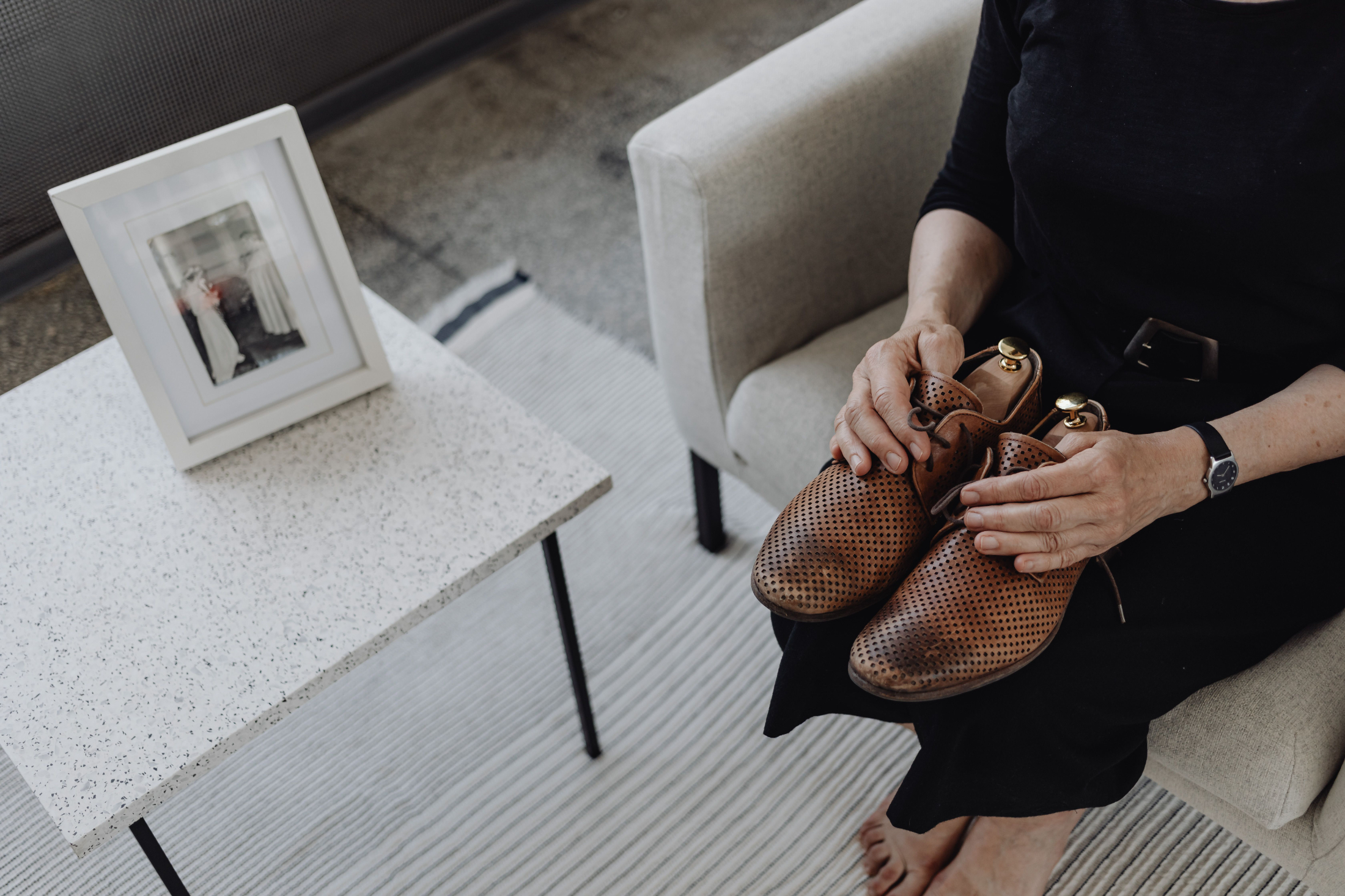
The Possessions We Keep—and Why Letting Go Can Be So Difficult

At some point in life, most people find themselves opening a closet, a drawer, or a storage room and wondering the same thing:

How did we accumulate so much?

Years of life experience tend to leave a physical footprint.

Family photographs.

Children's artwork.

Holiday decorations.

Books, furniture, keepsakes, and belongings collected over decades.

Many of these items serve practical purposes. Others carry sentimental value that makes them difficult to part with.

As people begin considering downsizing, retirement, or simplifying their lifestyle, they often discover that the greatest challenge is not deciding where to live.

It is deciding what to keep.

Because letting go of possessions is rarely about the possessions themselves.

It is about the memories attached to them.

Why Decluttering Feels Emotional

If decluttering were simply a matter of organization, it would be easy.

The difficulty comes from what objects represent.

A box of childhood drawings may remind you of your children's early years.

An old piece of furniture may have been present during countless family gatherings.

A collection of keepsakes may serve as a reminder of people, places, and experiences that shaped your life.

The emotional attachment is real.

And that attachment deserves respect.

The goal is not to dismiss the significance of these belongings.

The goal is to recognize why they matter and approach decisions thoughtfully.

Often, the challenge is not whether an item has value.

The challenge is determining whether we need the item itself in order to preserve the memory.

The Difference Between Memories and Possessions

Many people unintentionally begin treating possessions as though they are responsible for preserving the past.

Yet memories are remarkably resilient.

A family story does not disappear because a box is donated.

A meaningful relationship is not erased because a piece of furniture changes ownership.

The experiences that shaped our lives remain part of us regardless of what happens to the physical objects associated with them.

This realization can be surprisingly freeing.

It allows us to appreciate possessions without feeling obligated to keep every item indefinitely.

The memory remains.

Even when the object does not.

Choosing What Truly Matters

One of the most valuable approaches to simplifying is focusing on intentionality rather than reduction.

The objective is not to get rid of everything.

It is to identify what genuinely adds value to your life today.

Some items deserve to stay because they continue to bring joy, meaning, or usefulness.

Others may have served an important purpose in the past but no longer contribute to the lifestyle you want moving forward.

Making these distinctions takes time.

There is no need to rush the process.

In fact, many people find that gradual, thoughtful decision-making leads to far greater peace of mind than attempting to tackle everything at once.

Making Room for the Next Chapter

One of the unexpected benefits of letting go is the sense of freedom it can create.

Physical space often influences mental space.

When our environment becomes less cluttered, we may find it easier to focus on what matters most.

Relationships.

Experiences.

Health.

Personal goals.

The next chapter of life often requires room for new opportunities.

Creating that room sometimes begins by thoughtfully evaluating what we continue to carry forward.

Not because the past lacks value.

But because the future deserves space as well.

Final Thoughts

The possessions we keep often tell the story of a life well lived.

They represent important memories, meaningful relationships, and experiences worth celebrating.

At the same time, it is important to remember that our lives are not defined by the things we own.

The most meaningful parts of our story exist beyond the objects themselves.

They live in the lessons we've learned, the people we've loved, and the memories we've created along the way.

Letting go is not about forgetting.

It is about recognizing that what matters most can never be placed on a shelf.

And sometimes creating space for the future begins with understanding that the memories we cherish will remain, regardless of what we choose to keep.


Read

What If Your Home Could Talk?

Every home has a story to tell.

Not because of the bricks, the walls, or the roof that shelter it, but because of the people who have lived within it. A home quietly witnesses life's biggest milestones—the excitement of moving day, the laughter of children playing in the hallway, late-night conversations around the kitchen table, holiday traditions, and countless ordinary moments that become cherished memories over time.

If your home could speak, it probably wouldn't tell you how much it's worth or how many bedrooms it has. Instead, it would tell the story of the life you've built together. It would remember the celebrations, the challenges you've overcome, and the little moments that often mean the most.

But perhaps it would also remind you of something else—that every chapter eventually comes to an end. Not because the memories lose their value, but because life continues to move forward. Sometimes, the greatest purpose of a home is preparing you for what's next.

So, what if your home could talk? What do you think it would say?

"I Remember the Day You Chose Me."

"You walked through my front door with excitement and possibility. I wasn't just another house on the market—I became the place where your future would unfold."

Every homeowner remembers that feeling.

The first time you unlocked the front door. Deciding where the furniture would go. Hanging family photos on freshly painted walls. Dreaming about birthdays, holidays, and quiet Sunday mornings that hadn't happened yet.

At that moment, your home represented more than ownership.

It represented hope.

Over the years, those empty rooms transformed into spaces filled with life. What once felt unfamiliar gradually became the backdrop for everyday routines that now seem impossible to imagine anywhere else.

Your home would likely tell you it was proud to be part of those moments.

Not because it was perfect, but because it gave your life a place to happen.

"I've Watched Your Family Grow."

"I've seen tiny footsteps become confident strides. I've listened to bedtime stories, birthday songs, and conversations around the dinner table that lasted long after the plates were cleared."

Homes witness growth in remarkable ways.

Children who once measured their height against a doorway eventually pack their bags for college or careers. Spare bedrooms become nurseries, then study spaces, and eventually quiet rooms waiting for occasional visits home.

Family traditions are created almost without realizing it.

The corner where the Christmas tree always stood.

The backyard where birthdays were celebrated.

The kitchen where recipes were passed from one generation to the next.

These spaces become meaningful because of the memories attached to them—not because of the materials used to build them.

If your home could talk, it wouldn't remember the renovations nearly as much as it would remember the people.

"Things Feel Different Now."

"The mornings are quieter. Some rooms stay empty for weeks at a time. I still love watching the sunlight fill the windows, but I know life has changed."

One of the hardest realities of homeownership is recognizing when a season has ended.

The home hasn't changed very much.

But life has.

Perhaps children have grown up and moved out. Maybe retirement has created new routines. You may find yourself using only a handful of rooms while the rest of the house quietly waits.

That doesn't mean your home has become less valuable.

It simply means its role in your life may be changing.

Many homeowners struggle with this realization because it feels like letting go of the past.

In reality, it's acknowledging that your future deserves the same thoughtful attention your past received.

A home can faithfully serve one chapter of your life while still making room for another family to begin theirs.

"Don't Stay Just Because of Me."

"The memories you've created here don't belong to these walls. They belong to you."

This may be the most important thing your home would say.

It's easy to believe that leaving a home means leaving behind the life you built there.

But memories don't disappear when you change your address.

The laughter shared around the dining table, the photographs on the walls, and the countless everyday moments that made your house feel like home all remain part of your story.

Your home was never meant to hold your memories captive.

It was meant to give them a place to grow.

Sometimes we stay because we're afraid moving means saying goodbye.

In reality, moving often means saying thank you.

Thank you for the years you've given us.

Thank you for the milestones you've witnessed.

Thank you for preparing us for whatever comes next.

"I'll Always Be Part of Your Story."

Every meaningful chapter eventually gives way to another.

That's true for careers.

It's true for families.

And it's true for homes.

If your house could offer one final piece of advice, it probably wouldn't tell you to stay or to leave.

It would simply encourage you to make your next decision with confidence rather than fear.

If your current home still supports the life you want to live, that's something worth celebrating.

If it no longer does, that's okay too.

The greatest purpose of a home isn't to keep you in one place forever.

It's to support the people inside it for as long as they need it.

When that purpose changes, it doesn't diminish everything that came before.

It simply opens the door to another chapter waiting to be written.

Take a Moment to Reflect

Imagine sitting quietly in your favorite room.

If your home could speak to you today, what would it say?

Would it remind you of the life you've built?

Would it encourage you to appreciate the memories you've created?

Or would it gently ask whether it's still helping you become the person you're growing into?

Then ask yourself one more question.

What do you want the next chapter of your story to look like?

Sometimes the answer is creating new memories right where you are.

Other times, it's allowing another family to begin their story while you begin yours somewhere new.

Neither choice erases the past.

Both honor it.

Conclusion

A home is never just a building.

It's the setting for birthdays, quiet evenings, unexpected conversations, celebrations, setbacks, and countless moments that shape who we become.

Those memories don't live in the walls—they live in the people who shared them.

As life changes, it's natural for our needs to change as well. Recognizing that doesn't mean you've outgrown your home in a negative way. It simply means you're continuing to grow.

The best homes don't ask us to stay forever.

They give us exactly what we need for the season we're in, and when the time comes, they quietly encourage us to embrace whatever comes next.

Because in the end, home isn't defined by one address.

It's defined by the life you build, wherever your next chapter takes you.

Ready for Your Next Chapter?

Whether you're perfectly content where you are or beginning to wonder what the future might hold, taking time to reflect on your journey is always worthwhile.

When you're ready to explore what's next, I'd be honored to help you navigate that decision with thoughtful guidance and honest advice. Every move begins with a conversation, and every new chapter deserves a home that supports the life you're excited to build.


Read
This website may only be used by consumers that have a bona fide interest in the purchase, sale, or lease of real estate of the type being offered via the website. The data relating to real estate on this website comes in part from the MLS® Reciprocity program of the PropTx MLS®. The data is deemed reliable but is not guaranteed to be accurate.